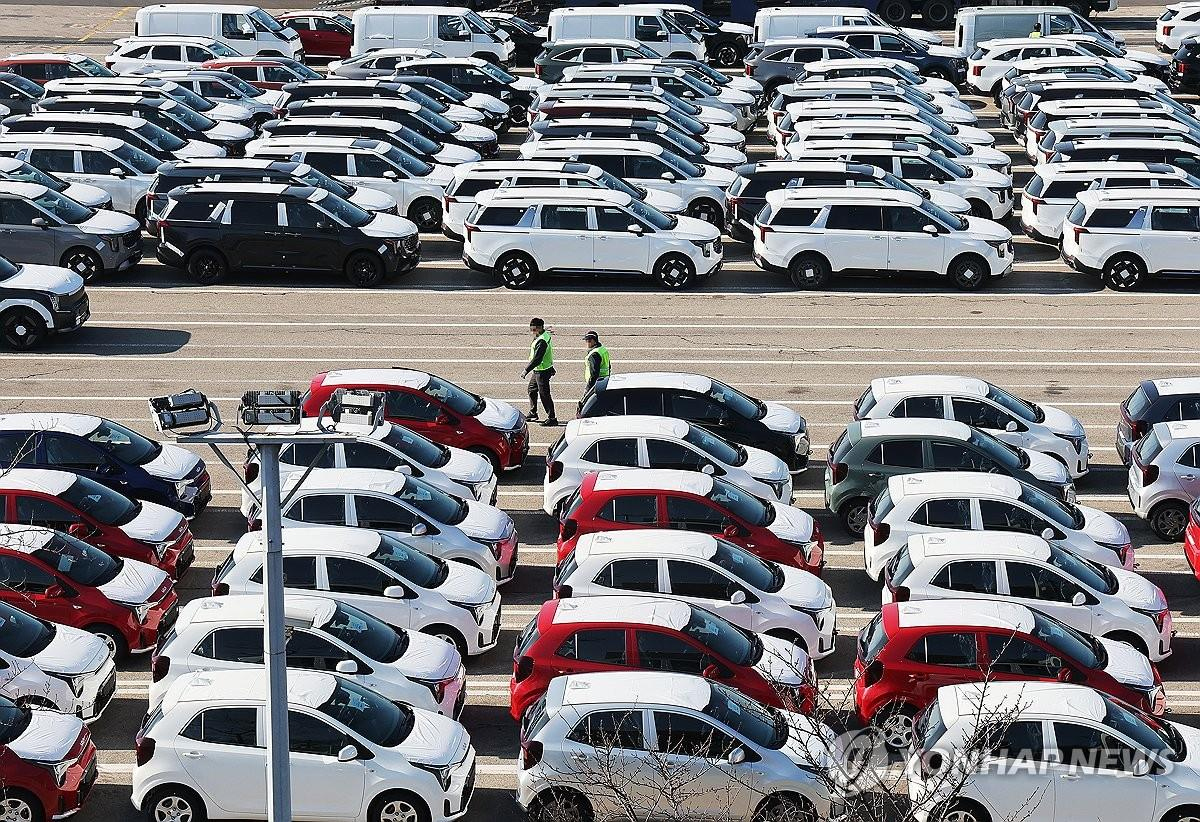
This photo, taken without a specific date, depicts cars waiting at a port prior to being transported abroad. [YONHAP]
Vehicle exports from South Korea are projected to decrease in 2025, marking the first drop in five years, according to industry sources. This is attributed to higher production levels abroad and U.S. import tariffs.
The Korea Automobile & Mobility Association (KAMA) projected this year’s vehicle exports to range between 2.71 million and 2.72 million units, reflecting a decrease of 2.3 to 2.6 percent compared to the 2.78 million units recorded last year, as reported by the sources.
If the prediction remains accurate, it would signify the first yearly decrease since 2020, when the Covid-19 pandemic caused disruptions in global vehicle deliveries, they mentioned.
Vehicle exports dropped to 1.88 million units in 2020, down from 2.4 million units in the prior year. Following this, shipments gradually increased, moving from 2.04 million units in 2021 to 2.76 million in 2023, according to KAMA data.
The expected decrease this year is primarily due to reduced exports to the United States, which is the biggest international market for Korean automobile manufacturers.
Between January and October, South Korea exported 2.25 million vehicles, with approximately 460,000 units anticipated to be sent out in the last two months of the year.
In the initial 10 months, exports to the United States made up 49 percent of the overall total. Deliveries to the market decreased by 7.9 percent compared to the previous year, reaching 1.1 million units.
The drop came after Hyundai Motor Group introduced Metaplant America in October, its specialized U.S. electric vehicle facility. The company intends to increase the plant’s yearly production from 300,000 to 500,000 units to satisfy regional demand.
Even though the U.S. government has lowered tariffs on cars manufactured in South Korea from 25 percent to 15 percent, industry representatives believe that tariff costs will continue to affect exports to the American market.
“If Hyundai Motor Group increases U.S. retail prices to sustain profits, consumer interest in Hyundai and Kia vehicles could decrease, resulting in more drops in deliveries,” said an industry representative.
Yonhap