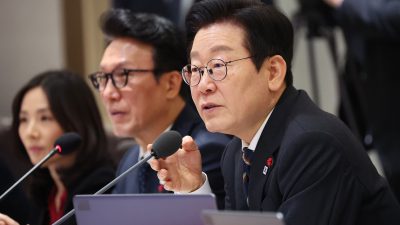
Mayor Shin Sang-jin of Seongnam stated on the 9th that the city has submitted a request to the court for temporary seizure and restraining orders on 14 properties linked to private developers implicated in the Daejang-dong development corruption scandal. To date, the city has obtained “security provision orders” for seven of these assets. The city is continuing with legal actions aimed at recovering illicit gains made by these individuals.
A court-issued security provision order mandates that the creditor (Seongnam Urban Development Corporation) offer security to cover possible damages incurred by the debtors (the Daejang-dong private developers) due to temporary seizure or restraining orders.
Previously, on the 1st, the Seongnam Urban Development Corporation submitted 14 preliminary seizure and injunction applications—including two injunctions related to real estate transfers—directed at 14 real estate properties and deposits held by private developers in Daejang-dong, submitting these requests to five courts, including the Seoul Central District Court. Following this, the courts mandated security for seven of these cases. The city stated, “The courts’ requirement for the creditor to provide security suggests that they acknowledge the importance of preserving assets, considering the preliminary seizure requests to be justified.”
As per the city’s release of the courts’ specific rulings on temporary seizures, in the case of Nam Wook, security orders were issued for deposit claims, including five bank accounts under NSJ Holdings Co., Ltd., amounting to 30 billion South Korean won. Furthermore, among the two requests for real estate disposal injunctions—one concerning a property in Cheongdam-dong, Seoul, and the other in Jeju—security was mandated for the Jeju property.
Security measures were put in place for all three temporary asset freezing requests related to Jeong Young-hak, totaling around 64.69 billion South Korean won.
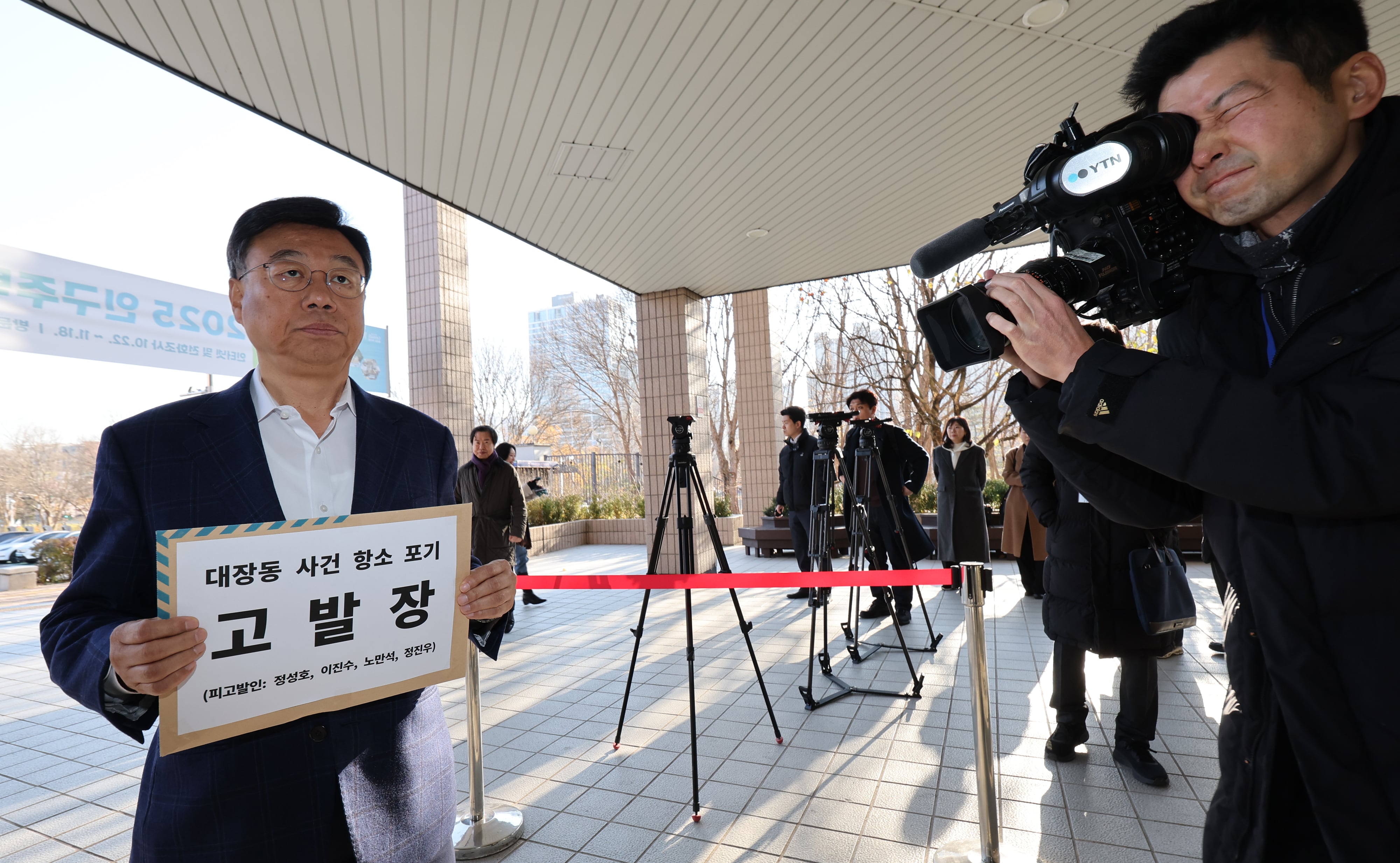
Seongnam City and the Seongnam Urban Development Corporation intend to quickly arrange the necessary security for the seven cases where courts have mandated security, accelerating the relevant processes to obtain approval decisions. Upon the provision of security, the courts are anticipated to issue final “provisional seizure approval decisions,” following which the assets will be frozen.
Concerning Kim Man-bae, the major shareholder of Hwacheon Daeyu Asset Management (Hwacheon Daeyu), the city mentioned that while the initial seizure request was for 420 billion South Korean won, the court issued a “supplementary order” for three out of the four cases—including Hwacheon Daeyu—asking for partial clarification of the claim’s intent. The city intends to submit additional documents by the 10th. The court requested more detailed explanation regarding Kim’s connection with the shell companies he exclusively owns, such as Hwacheon Daeyu, Cheonhadongin No. 2, and The Spring.
Mayor Shin conducted a press briefing at Seongnam City Hall on the same day to share an update on the status of these temporary seizure applications. He mentioned, “Our priority will be to strongly present the city’s losses and the validity of asset recovery for the remaining temporary seizure requests in order to obtain approval for all submissions.” He further noted, “I pledge to make every possible effort to recover even a single won obtained through the Daejang-dong incidents and to ensure justice is served.”
Meanwhile, the first hearing of the ‘Lawsuit for the Confirmation of Invalidity of Dividend Resolution,’ initially planned for the afternoon of the same day at the Suwon District Court’s Seongnam Branch, has been rescheduled to March 10 next year, at the court’s discretion. In response, Mayor Shin expressed disappointment, saying, “The court changed the date without clear justification.” The lawsuit seeks to invalidate the dividend resolution approved during the shareholders’ meeting of ‘Seongnam’s Garden,’ the entity responsible for the Daejang-dong project, independent of the ongoing criminal investigations and damage compensation claims related to the Daejang-dong case. The city stated, “If this lawsuit is accepted, the dividend payments to those involved in the Daejang-dong incident would be fundamentally nullified, effectively recovering the illicit gains.”